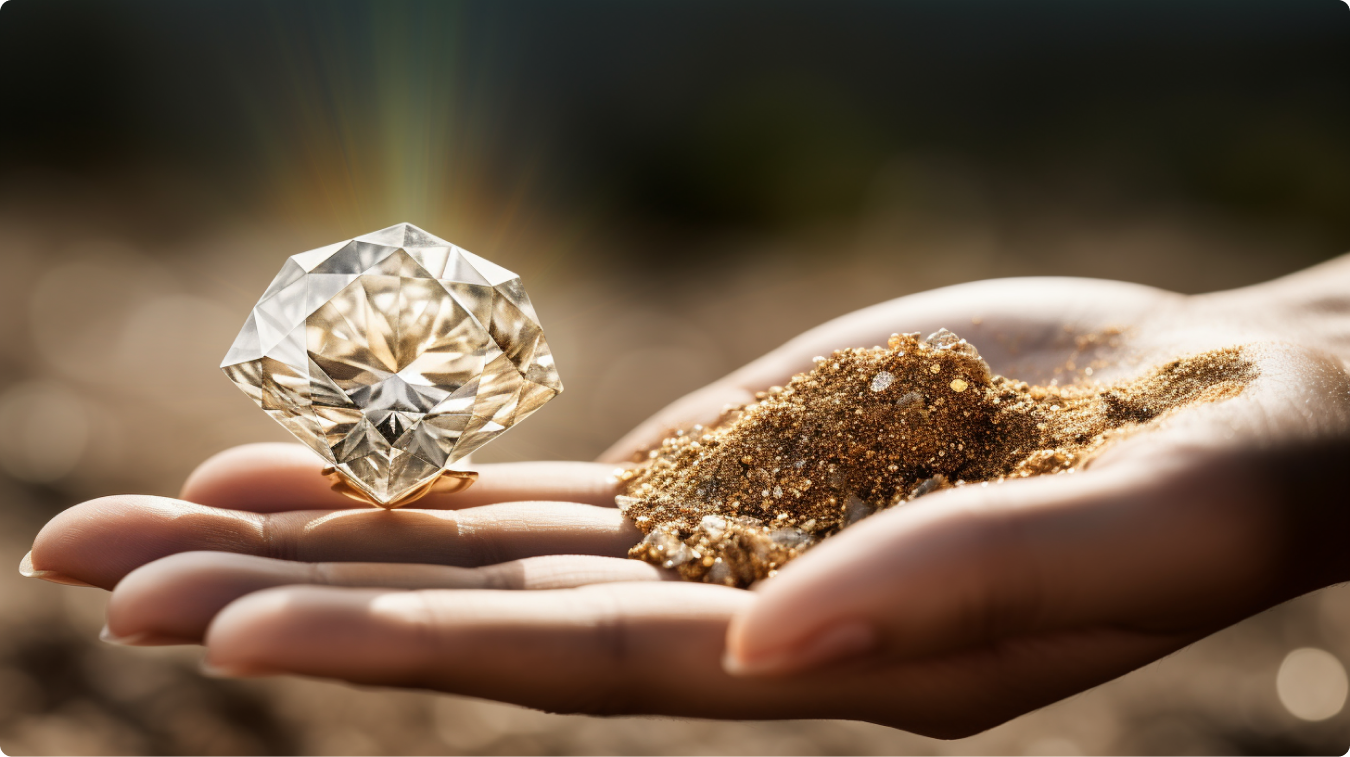


A halo engagement ring is designed to make the centre stone the visual focus. A circle, or “halo”, of smaller diamonds surrounds the main diamond, adding sparkle and often creating the impression of a larger face-up stone.
For couples researching halo engagement rings Australia, appearance is only one part of the decision. The centre diamond, halo proportions, setting height, precious metal and wedding-band compatibility can all change how the finished ring looks and feels on the hand.
Understanding these details before choosing a design makes it easier to find a ring that suits both personal style and everyday wear.
Table of Contents
What Makes a Halo Engagement Ring Different?
The defining feature of a halo ring is the border of smaller stones around the centre diamond. These accent stones reflect light around the main stone, creating a bright outline and giving the ring more visual presence.
That makes halo settings quite different from solitaires. A solitaire relies almost entirely on the centre diamond for impact, while a halo uses both the centre stone and surrounding diamonds as part of the overall design.
Halo rings can range from delicate and understated to highly detailed. A thin halo placed close to the centre stone may create a refined outline. Larger accent stones or multiple halos can produce a much stronger statement.
The setting can also influence how people perceive the centre diamond. A carefully proportioned halo may make the central stone appear broader without requiring a substantial increase in its carat weight.
Centre Diamond Shape Changes the Whole Design
Halo settings are flexible because they can be built around many diamond shapes.
Round brilliant diamonds create a traditional look with strong sparkle. Oval diamonds offer an elongated appearance and can make the finger look visually longer. Cushion shapes tend to create softer outlines, while emerald-cut diamonds provide a more structured appearance based on broad flashes of light rather than intense scintillation.
Pear, radiant and marquise diamonds can also work with halo designs, though the halo needs to follow the centre stone’s outline carefully.
The best combination is not simply the shape that produces the most sparkle. It is the one that creates the overall appearance the wearer prefers.
A shopper interested in comparing available designs can use a specialist collection of halo engagement rings Australia to see how different centre shapes, halo arrangements and ring styles alter the finished appearance.
How Should the Halo Relate to the Centre Stone?
Proportion matters more than many first-time buyers expect.
If the surrounding diamonds are visually too prominent, they can compete with the centre stone. If they are extremely small or spaced poorly, the halo may not create the continuous outline the buyer expects.
A balanced halo usually supports the centre diamond rather than distracting from it.
There is also the question of spacing. Some designs position the halo very close to the main diamond. Others leave a subtle visual gap that makes the centre stone’s outline easier to distinguish.
Neither approach is automatically better. A close halo can create a unified field of sparkle, while a slightly separated halo can give the centre diamond more individual definition.
Carat Weight Is Only Part of Visual Size
Carat measures diamond weight, not the exact dimensions someone sees from above.
Two diamonds with similar carat weights can have different visible dimensions because diamond shape, cut proportions and depth affect how weight is distributed.
This is especially worth considering with lab grown diamonds rings because the surrounding stones already add visible width to the design. Buyers may therefore want to consider the complete face-up appearance of the ring rather than focusing on the centre diamond’s carat figure alone.
Looking at measurements alongside carat weight provides a clearer idea of how large a diamond may appear once set.
Lab-Grown Diamonds and Halo Settings
Lab-grown diamonds can be used in halo engagement rings in the same types of design roles as mined diamonds. They are real diamonds with the same fundamental crystal structure, although their origin differs because they are created in controlled laboratory conditions rather than extracted from the earth.
For buyers considering a lab-grown centre stone, the same core quality factors still matter. Cut quality has a major effect on light performance, while colour and clarity influence the diamond’s visual characteristics.
A grading report can also provide independent information about important attributes of the centre diamond. Buyers should review what organisation issued the report and confirm that the stone being purchased matches its grading documentation.
Which Metal Works Well With a Halo Ring?
Metal changes both the appearance and practical character of an engagement ring.
White gold and platinum can create a visually continuous transition between white diamonds and the surrounding setting. Yellow gold provides stronger contrast, which can give a halo ring a warmer and more traditional character. Rose gold offers another warm-toned alternative with a softer colour.
Some designs use more than one metal tone. For example, the diamond setting may use a white metal while the band uses yellow or rose gold.
The choice is mainly about style, but maintenance and wear should also be considered. Different metals have different properties, so buyers should understand the care requirements of their chosen option.
Halo vs Solitaire: Which Style Fits Better?
Neither setting is universally preferable.
| Feature | Halo Setting | Solitaire Setting |
|---|---|---|
| Overall look | Detailed and sparkling | Clean and centre-stone focused |
| Visual presence | Usually broader | Depends strongly on centre stone |
| Accent diamonds | Common | Usually absent |
| Design complexity | More detailed | Generally simpler |
| Maintenance | More small settings to inspect | Fewer accent stones to monitor |
Someone who prefers simplicity may favour a solitaire. A buyer who enjoys extra diamond detail and a larger-looking outline may find a halo more appealing.
Personal style should carry more weight than trends because an engagement ring is normally intended for long-term wear.
Check Wedding Band Compatibility Early
One easily overlooked issue is how the engagement ring will sit beside a wedding band.
Some halo settings are raised high enough for a straight wedding band to sit closely against the engagement ring. Others have baskets, halos or structural details that create a small gap.
That gap is not necessarily a design problem. Some people actually prefer visible separation between the rings. Those wanting a flush appearance, however, should consider band compatibility before finalising the engagement ring.
Trying different profiles together can prevent surprises later.
Everyday Wear Deserves as Much Attention as Sparkle
A halo ring contains several small stones, so craftsmanship and routine care matter. The tiny accent stones are held by small sections of metal that should be inspected periodically, particularly if the ring is worn every day.
Setting height is another practical consideration. A high-profile ring can create a dramatic appearance but may catch more easily on clothing or other objects. A lower profile may suit someone who regularly works with their hands.
Lifestyle should therefore influence the design decision alongside diamond shape and aesthetics.
Before purchasing, it is useful to examine the ring from more than the top. Look at the side profile, how the centre stone is supported, how securely the halo stones are set and how the band connects to the setting. These less obvious details often determine how comfortable and practical a beautiful ring becomes over years of regular wear.