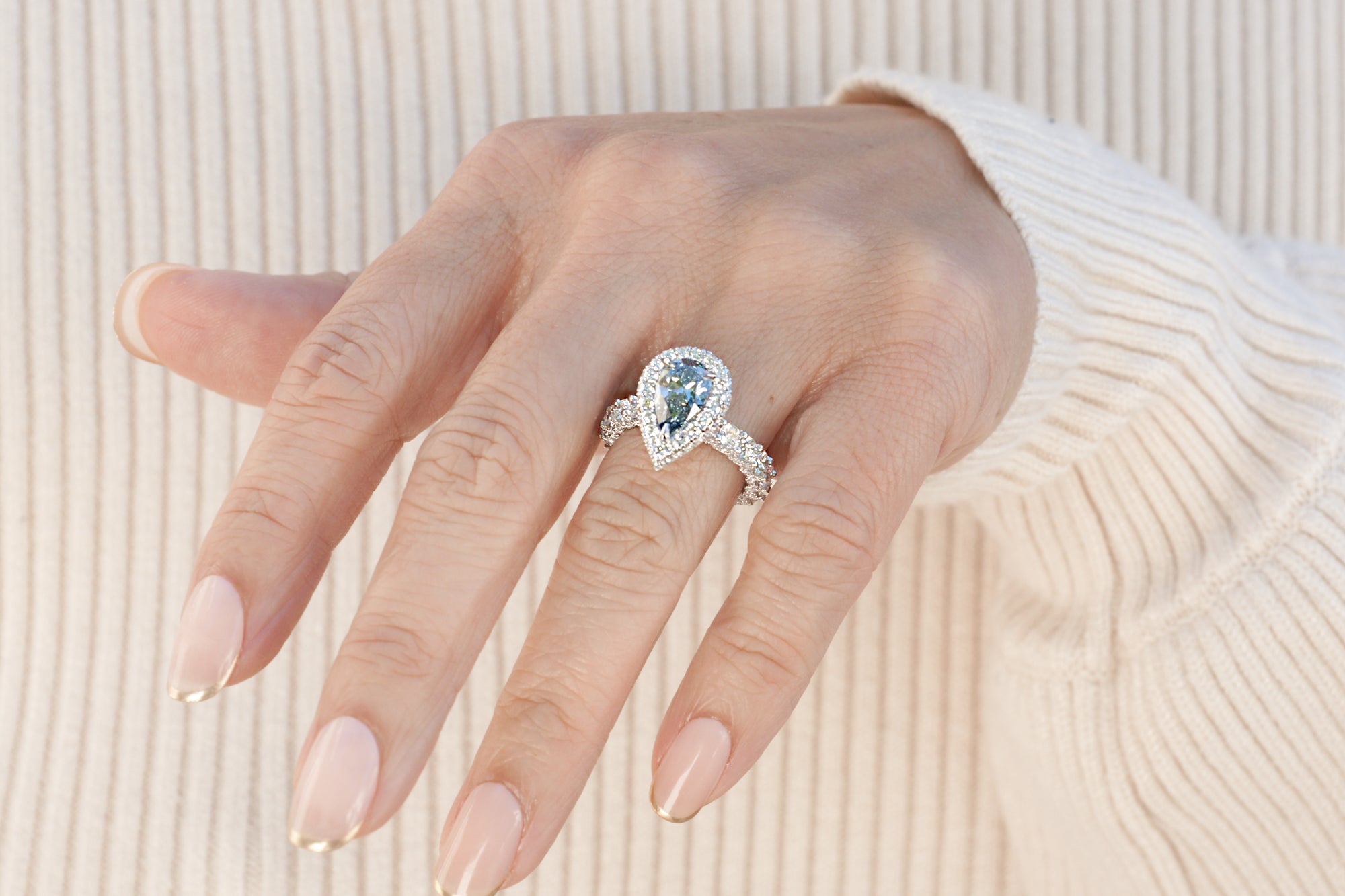


Two diamonds can look very similar next to each other in a jewelry display, but they could have been formed in different places and be suited to different settings.
That is why learning only the size or sparkle of a diamond in order to identify it can provide an incomplete view.
People who are researching tipos de diamantes often have two sets of classification questions, one that asks whether the diamond is natural or lab created, and the other that seeks to describe the physical and graded characteristics of the diamond, such as its shape, level of cut quality, color, clarity and weight.
Keeping these categories separately makes things a lot simpler to compare.
For customers in Spain that are thinking about an engagement ring, wedding jewelry or something else important, understanding the difference between the two sets of categorization can also help to ensure that they are not paying extra for characteristics that may have little noticeable effect.
Table of Contents
Natural and Laboratory-Grown Diamonds: The Main Difference is Origin
Natural diamonds are formed underground and mined back out into the world, while laboratory-grown diamonds are made using technological processes that replicate the conditions necessary for the formation of natural diamonds.
Both are diamond, and not a diamond substitute, with laboratory-grown diamonds being essentially identical in terms of their crystal structure and chemical make-up.
Their availability and market differences, however, are worth noting with regard to the origin of the stone.
This means that a grading report should be able to specify a laboratory-grown diamond as such.
As a result, buyers that are researching lab created diamonds can compare these products based on characteristics that are typically used to describe a diamond’s cut, color, clarity and weight rather than as a substitute diamond alternative.
Shape and Cut Are Related, but They Are Not the Same
Diamond terminology gets a little confusing because “cut” is sometimes used to refer to a diamond shape.
Diamond shape describes the outline of the gemstone, while cut quality refers to a diamond’s interaction with light.
This distinction has a very practical application, because two round diamonds of the same carat weight can have very different degrees of brightness depending on their proportioning.
Round Brilliant
Round brilliant diamonds are all about the powerful light return and are popular choices for solitaire engagement rings, while their balanced shape also helps to make pairing with many wedding-band designs easier.
Oval and Pear
Oval diamonds can stretch the appearance of a finger, while pear shapes add a directional aspect and require extra consideration over the placement and protection of the pointed end.
For elongated diamonds, it is always a good idea to look at the shape itself, rather than just using the carat weight as an indicator of the overall size of the stone.
Emerald Cut
Emerald-cut diamonds use step-like facets rather than the facets seen in diamonds with a brilliant cut, which allows for large flashes of light and distinctive geometric look that can also provide a greater sense of openness to look at the inside of the diamond.
In terms of clarity, the open facet pattern in an emerald cut diamond can make inclusions stand out more, which means that a diamond’s clarity grade might have to be scrutinized more closely than for other diamonds with a similar cut shape.
Cushion
Cushion-cut diamonds have a square or rectangular shape that has its corners rounded off, with significant variation in proportioning possible, meaning that it is always a good idea to look more closely in comparison at the differences in length and width rather than selecting just based on the carat weight.
A More Useful Way to Compare Tipos de Diamantes
A buyer has a way to narrow things down when it comes to tipos de diamantes by thinking through how each characteristic can affect the piece.
| Characteristic | What it tells you | Practical question |
|---|---|---|
| Origin | Natural or laboratory-grown | Is origin important to your purchasing priorities? |
| Shape | Visible outline | Does it suit the ring design and finger coverage you want? |
| Cut | Light performance and proportions | Does the stone look bright and balanced in person or video? |
| Color | Degree of visible body color | Will the difference be noticeable in the chosen metal? |
| Clarity | Presence of inclusions or blemishes | Are inclusions visible without magnification? |
| Carat | Diamond weight | What are the stone’s actual face-up dimensions? |
This approach can help to avoid a common purchasing mistake: trying to get the best grade in every category.
Carat Weight Does Not Tell You How Large a Diamond Looks
Carat is a measure of weight rather than diameter or surface area.
A diamond’s proportioning can have an effect on how large a diamond appears when viewed from the top, but so does its shape.
Elongated types like oval, pear and marquise diamonds might offer up a different degree of coverage across the finger as compared to round stones of similar carat weight.
For that reason, a comparison to millimeter measurements should always be made alongside the carat weight.
This is especially important for online purchases in Spain, where it is possible that buyers might only look at a diamond through photographs, videos and grading information before being able to hold the stone in their hands.
Color and Clarity Should Be Judged in Context
Color and clarity grades are helpful tools for comparative shopping, but the decision to go strictly for the highest possible grades can push the budget into spending more on the differences that might only be noticeable after a diamond has been put into its setting.
Metal choice plays a role in color, too, with white gold or platinum creating a different visual connection to the stone than yellow or rose gold.
Clarity also requires context, with the location, size and nature of inclusions being important, as well as the diamond’s shape.
A buyer might prefer a stone with some inclusions that are challenging to see without a loupe over paying significantly more for a diamond whose clarity grade is higher.
The grading report and visual evaluation should complement each other.
The Setting Can Change Which Diamond Makes Sense
Different tipos de diamantes require different settings.
A bezel can cover more of the perimeter of a stone and offer its edges additional protection, while a prong setting exposes more of the stone, but requires secure and well-maintained prongs.
Pointed shapes, like pear and marquise diamonds, need extra care to protect vulnerable tips.
A halo can make the centre stone look bigger, while a solitaire engagement ring places more of a spotlight on the centre stone itself.
Wedding-band compatibility should also always be considered at the same time, because a flat band design might fit well with some engagement-ring settings, but leave a space or require a curved band to work well with others.
Certification and the Actual Stone Deserve Equal Attention
A grading report is a good source of consistent information about a diamond’s characteristics, such as its measurements, carat weight, color and clarity.
For laboratory-grown stones, the report should also clearly indicate the origin of the diamond.
Certification should not take the place of a visual evaluation, however, which means asking for images or video if shopping remotely, checking the measurements, and looking at how the stone looks in a more ordinary light source than in specialized jewelry photography.
For elongated diamonds, symmetry and overall proportioning should be evaluated, while for step cuts, any visible inclusions and facet pattern should be scrutinized.
For brilliant cuts, the brightness and the appearance of consistently dark areas should be examined.
Understanding tipos de diamantes means less memorization of categories and more of an understanding of how origin, shape, grading and setting design fit together in order to change a piece. The most useful form of comparison is the one that explains what each specification in a diamond will actually do for the final pieces.